
Custom Hardscaping in Fredericksburg, VA
Patios, retaining walls, and outdoor living features built to last — the structure and character that turn a plain yard into the place you spend every good evening.
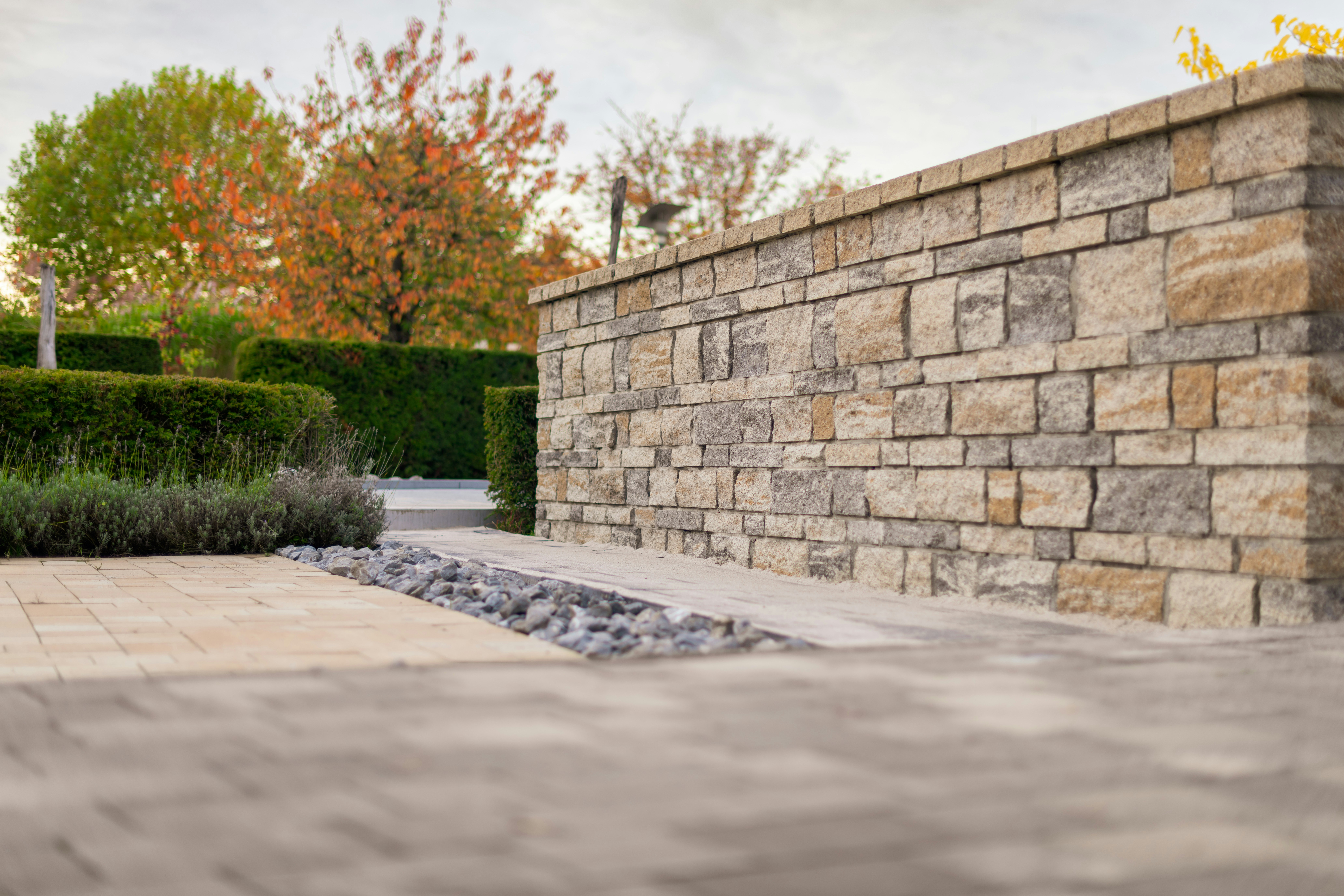
The Bones of a Great Outdoor Space
Plants soften a yard, but hardscapes define it. A well-built patio gives you somewhere to gather. A proper retaining wall turns a useless slope into usable ground — and holds for decades. These are the features that add real living space, curb appeal, and value to your home.
They’re also the features that fail fastest when they’re built wrong. A patio without a proper base heaves and cracks; a retaining wall without drainage bows and blows out. Woodpeckers builds hardscapes the right way — quality materials, engineered bases, real drainage — so what we build stays beautiful and solid for the long haul. And because we clear trees and grade the site ourselves, your project is handled start to finish by one crew.
Retaining Walls
Custom walls that turn slopes into usable space and hold up for the long haul — built with proper drainage and engineered bases, not just stacked block.
Patios & Outdoor Living
Paver and natural-stone patios designed to fit your yard and built to last, giving you the outdoor room you’ve been picturing.
Why Our Hardscapes Hold Up
Built on a proper foundation.
The difference between a hardscape that lasts and one that fails is what’s underneath. We don’t cut corners on base prep, compaction, or drainage — the parts you never see but always feel.
Quality materials, expert craftsmanship.
We combine durable materials with a crew that takes pride in clean lines and tight, lasting work.
Designed to fit your space.
Every patio and wall is custom to your yard, your layout, and how you want to use it — never a copy-paste kit.
One crew for the whole project.
Trees cleared, site graded, wall or patio built — all in-house. No coordinating three contractors, no finger-pointing when something’s off.
Frequently Asked Questions
How much does a paver patio or retaining wall cost?
The big drivers are size, the material you choose (standard concrete pavers sit at one end, natural stone at the other), and your site’s conditions — slope, access for equipment, and how much excavation or drainage work the ground needs before anything gets built. For retaining walls, height matters a lot, since taller walls require reinforcement and sometimes engineering. Two patios of the same size can price differently based on what’s underneath. A free on-site estimate is the only way to get an accurate number for your project.
Pavers vs. poured concrete — which is better for a patio?
Poured concrete is usually cheaper and faster upfront, but in Virginia’s freeze-thaw winters it tends to crack over time, and once it cracks it’s hard to fix invisibly. Interlocking pavers cost more initially but flex with the ground instead of cracking, come in far more design options, and if one ever gets stained or damaged you lift and replace that single unit rather than redoing the slab. For a patio meant to last decades in this climate, pavers usually win on lifetime value — which is why we most often recommend them.
How long will a paver patio or retaining wall last?
A properly built paver patio can last 25 to 50 years or more, and a well-built retaining wall holds for decades. But here’s the key: lifespan is determined less by the material on top and more by what’s underneath — the base preparation, compaction, and drainage. A beautiful wall or patio on a poor foundation fails early; the same materials on a proper base outlast the people who built them. That groundwork is exactly where we don’t cut corners.
Do I need a permit for a retaining wall or patio?
Patios usually don’t require a permit since they sit at grade, though some localities have stormwater or impervious-surface rules worth checking. Retaining walls are different: above a certain height — often around four feet, though it varies by county — they typically require a permit and an engineered design. We handle this as part of the project and will tell you exactly what yours needs before we break ground.
What causes retaining walls to fail, and how do you prevent it?
The number one killer is water. When drainage is missing or inadequate, water builds up behind the wall and the pressure pushes it until it bows, leans, or blows out. The other common culprits are a weak or poorly compacted base and skipping reinforcement (like geogrid) on taller walls. We build in proper drainage — gravel backfill and a drainage path so water escapes instead of collecting — set walls on a compacted base, and reinforce where height demands it. That’s why our walls hold when cheaper builds don’t.
Let's Build Something That Lasts
Get a free estimate on a patio, retaining wall, or full outdoor-living project from a local crew that builds it right.